
- +86-13363869198
- weimiaohb@126.com

Apr . 01, 2024 17:55 Back to list
Fluid Bed Dryers drug maker Performance Analysis
Introduction
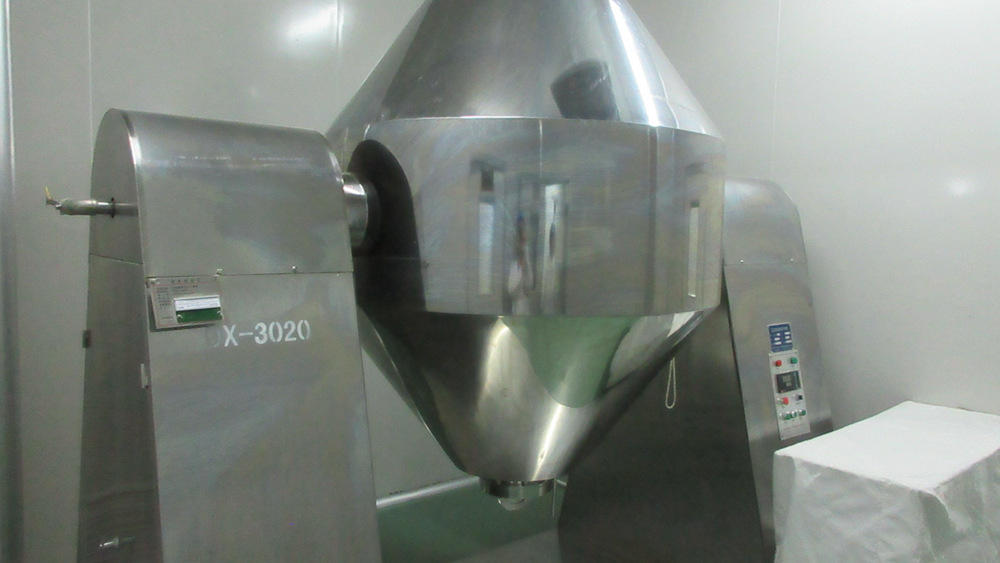
Drug makers, encompassing pharmaceutical manufacturers and active pharmaceutical ingredient (API) producers, represent a critical segment of the global healthcare infrastructure. This technical guide focuses on the engineering and material science aspects of solid dosage form (tablet and capsule) manufacturing equipment, specifically fluid bed dryers – a cornerstone technology for achieving required moisture content and ensuring product stability. The industry chain positions these dryers downstream of granulation, coating, or direct compression processes, and upstream of final packaging. Core performance metrics center on drying rate, temperature uniformity, powder attrition (particle size degradation), and adherence to stringent Good Manufacturing Practice (GMP) standards. A primary pain point is achieving consistent drying profiles across batches, minimizing product degradation during processing, and validating cleaning procedures to prevent cross-contamination. Efficient and reliable fluid bed drying is paramount to drug efficacy and patient safety.
Material Science & Manufacturing
Fluid bed dryers typically utilize 316L stainless steel as the primary construction material due to its exceptional corrosion resistance against common pharmaceutical solvents and cleaning agents (CIP solutions). The steel’s austenitic structure imparts good weldability and formability, crucial for fabricating the complex geometries of the dryer vessel, distributor plate, and internal baffles. The distributor plate, often perforated, is typically manufactured from the same 316L stainless steel, with hole size and distribution meticulously designed to ensure even air distribution. Filter bags, essential for solid-liquid separation, are commonly constructed from polypropylene, polyester, or PTFE-coated fabrics, chosen for their chemical compatibility and air permeability. Manufacturing involves several critical processes. Welding is performed using GTAW (Gas Tungsten Arc Welding) under inert gas shielding to prevent oxidation and maintain stainless steel’s corrosion resistance. Surface finishing employs electropolishing to reduce surface roughness, minimizing particle adhesion and facilitating cleaning. Air handling units (AHUs) incorporate HEPA filters (High-Efficiency Particulate Air) to ensure air supplied to the fluid bed is free from particulate contamination. Key parameters include airflow rate (maintained through precise fan speed control), inlet air temperature (regulated by heating elements - typically electric or steam), exhaust air temperature (monitored to determine drying endpoint), and bed height (controlled by batch size). Proper grounding is essential to prevent electrostatic discharge, particularly when handling flammable solvents.

Performance & Engineering
Fluid bed drying relies on the principles of fluidization, where an upward flow of air suspends solid particles, creating a fluid-like bed. Force analysis focuses on drag force (Fd) exerted by the air on the particles, gravitational force (Fg) acting downwards, and particle-particle interactions. Fluidization is achieved when Fd exceeds Fg, leading to particle suspension. Engineering considerations include maintaining a stable fluidized bed, preventing particle segregation, and minimizing attrition. Environmental resistance involves withstanding temperature fluctuations, humidity changes, and potential exposure to corrosive cleaning agents. Compliance requirements are governed by GMP regulations (21 CFR Part 210 & 211 in the US), which mandate stringent validation of cleaning procedures, temperature mapping, and airflow distribution. Functional implementation involves integrating the fluid bed dryer with upstream and downstream equipment, including granulation stations, coating pans, and packaging lines. Control systems utilize Programmable Logic Controllers (PLCs) for precise control of airflow, temperature, and drying time, with Supervisory Control and Data Acquisition (SCADA) systems providing real-time monitoring and data logging. Proper vessel design, including appropriate aspect ratio (height to diameter) and distributor plate configuration, is crucial for achieving uniform fluidization and preventing channeling.
Technical Specifications
| Parameter | Unit | Typical Range | Criticality |
|---|---|---|---|
| Airflow Rate | m³/h | 500 – 5000 | High |
| Inlet Air Temperature | °C | 40 – 80 | High |
| Exhaust Air Temperature | °C | 30 – 60 | Medium |
| Bed Height | mm | 100 – 400 | Medium |
| Particle Size Range | µm | 50 – 1000 | High |
| Moisture Content (Initial) | % w/w | 20 – 60 | High |
| Moisture Content (Final) | % w/w | < 0.5 | High |
Failure Mode & Maintenance
Common failure modes in fluid bed dryers include: 1) Distributor Plate Clogging: Accumulation of fine particles can restrict airflow, leading to uneven drying and localized overheating. Maintenance involves regular inspection and cleaning of the distributor plate. 2) Filter Bag Failure: Tears or excessive wear can allow particles to pass through, contaminating the exhaust air. Regular bag replacement and pressure drop monitoring are essential. 3) Heating Element Failure: Malfunctioning heating elements can cause temperature fluctuations and prolonged drying times. Routine electrical safety checks and element replacement are required. 4) Fan Motor Failure: Bearing wear or electrical issues can lead to reduced airflow and potential downtime. Preventative maintenance includes lubrication and motor winding inspection. 5) Particle Attrition: Excessive shear forces during fluidization can lead to particle size degradation, affecting product quality. Optimizing airflow rates and utilizing anti-static measures can mitigate this. 6) Corrosion: Despite using 316L SS, exposure to highly corrosive cleaning agents can cause localized pitting. Thorough rinsing and selection of appropriate cleaning solutions are crucial. Preventative maintenance schedules should include visual inspections for corrosion, weld integrity checks, and performance testing of critical components. Root cause analysis of failures should be conducted to identify systemic issues and improve reliability.
Industry FAQ
Q: What are the key considerations when scaling up a fluid bed drying process from laboratory to production scale?
A: Scale-up requires maintaining constant superficial air velocity and solid-air mixing intensity. This necessitates careful recalculation of airflow rates and distributor plate designs based on vessel diameter and batch size. Geometric similarity is crucial, and computational fluid dynamics (CFD) modeling can be employed to optimize airflow patterns and prevent channeling. Particle size distribution and bed porosity also change with scale, requiring adjustments to drying parameters.
Q: How do you validate the cleaning process for a fluid bed dryer to prevent cross-contamination?
A: Cleaning validation involves establishing acceptance criteria for residual API levels, typically based on established Permitted Daily Exposure (PDE) limits. Swab sampling and rinse sampling are performed at critical contact surfaces after cleaning. Analytical methods must be sensitive enough to detect trace amounts of API. Multiple cleaning cycles are performed to demonstrate reproducibility. Documentation includes cleaning procedures, validation protocols, and analytical data.
Q: What are the challenges associated with drying cohesive materials in a fluid bed dryer?
A: Cohesive materials tend to agglomerate, hindering fluidization and leading to uneven drying. Strategies include increasing airflow velocity (within acceptable attrition limits), pre-conditioning the material with a lubricant or anti-static agent, utilizing a pulsed airflow regime to break up agglomerates, and employing a fluidized bed with a conical bottom to promote particle movement.
Q: How does the choice of filter bag material impact drying performance and product quality?
A: Filter bag material affects airflow resistance, particle retention efficiency, and chemical compatibility. Polypropylene offers good chemical resistance but can be susceptible to static buildup. Polyester provides higher tensile strength but may be less resistant to certain solvents. PTFE-coated fabrics offer superior chemical resistance and reduced static but are more expensive. The pore size of the filter bag must be selected to effectively retain particles while maintaining acceptable airflow rates.
Q: What role does temperature mapping play in ensuring product quality and process control?
A: Temperature mapping involves strategically placing temperature sensors throughout the fluidized bed to measure temperature distribution during drying. This data is used to identify hot spots, cold spots, and temperature gradients. Temperature uniformity is critical for achieving consistent drying rates and preventing product degradation. Mapping data is documented and used to establish control limits and alarm thresholds.
Conclusion
Fluid bed drying remains a vital process within pharmaceutical manufacturing, demanding a thorough understanding of both material science and engineering principles. Achieving optimal performance necessitates meticulous attention to detail in equipment design, parameter control, and preventative maintenance. Maintaining strict adherence to GMP guidelines and robust validation protocols is paramount to ensure product quality, patient safety, and regulatory compliance.
Future advancements in fluid bed dryer technology will likely focus on incorporating real-time process analytical technology (PAT) for continuous monitoring and control of critical process parameters, implementing advanced control algorithms for optimized drying profiles, and developing more energy-efficient designs to reduce operating costs and environmental impact. The integration of digital twins and machine learning will further enhance process understanding and predictive maintenance capabilities.