
- +86-13363869198
- weimiaohb@126.com

Apr . 01, 2024 17:55 Back to list
Zayepro Pharmaceuticals Ltd how are zayepro pharmaceuticals ltd drugs made Manufacturing Process
Introduction
Zayepro Pharmaceuticals Ltd. manufactures a diverse portfolio of pharmaceutical products, ranging from generic active pharmaceutical ingredients (APIs) to finished dosage formulations. The company operates within a highly regulated industry, adhering to stringent quality control measures and Good Manufacturing Practices (GMP) throughout its entire production lifecycle. This guide details the core processes involved in drug manufacture at Zayepro, emphasizing the scientific principles, engineering controls, and regulatory compliance aspects. The pharmaceutical manufacturing process can be broadly categorized into upstream processing (API synthesis/fermentation), downstream processing (purification and formulation), and final dosage form manufacturing. Core performance characteristics center on potency, purity, stability, and bioavailability, directly impacting therapeutic efficacy and patient safety. A primary industry pain point is maintaining consistent product quality across batch variations while minimizing production costs and adhering to increasingly complex regulatory requirements.
Material Science & Manufacturing
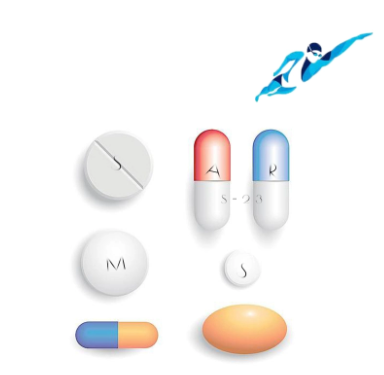
The manufacturing of Zayepro pharmaceuticals begins with sourcing of raw materials, including both chemical precursors for API synthesis and excipients for formulation. API synthesis often involves complex multi-step organic chemistry, requiring precise control of reaction parameters like temperature, pressure, pH, and reagent stoichiometry. Key raw materials include starting materials from petrochemical sources (e.g., benzene, toluene), inorganic salts (e.g., sodium chloride, hydrochloric acid), and solvents (e.g., ethanol, dichloromethane). Excipients, used to formulate the API into a usable dosage form, include fillers (e.g., lactose, microcrystalline cellulose), binders (e.g., polyvinylpyrrolidone), disintegrants (e.g., croscarmellose sodium), and lubricants (e.g., magnesium stearate). Manufacturing processes vary depending on the drug and dosage form. For solid oral dosage forms (tablets/capsules), processes include blending, granulation (wet or dry), tableting/encapsulation, and coating. Liquid formulations involve dissolution, filtration, and sterilization. Sterile formulations require aseptic processing and terminal sterilization. Critical process parameters (CPPs) are identified through risk assessment and controlled using statistical process control (SPC) methodologies. Material properties like particle size distribution, polymorphism, and hygroscopicity are crucial and carefully monitored. Chemical compatibility studies are performed to ensure the API and excipients do not interact detrimentally during storage.
Performance & Engineering
Pharmaceutical performance is rigorously evaluated through a series of analytical tests. Dissolution testing, performed according to USP/EP methods, assesses the rate and extent of drug release from the dosage form. Stability studies, conducted under accelerated and long-term conditions, determine the shelf life and storage requirements. Bioavailability studies, involving pharmacokinetic (PK) and pharmacodynamic (PD) assessments, evaluate the drug’s absorption, distribution, metabolism, and excretion (ADME) characteristics in vivo. Engineering controls are paramount. HVAC systems maintain precise temperature and humidity levels to prevent degradation. Water purification systems (reverse osmosis, distillation, deionization) produce pharmaceutical-grade water meeting USP/EP specifications. Process analytical technology (PAT) is increasingly employed for real-time monitoring and control of critical process parameters. Force analysis is utilized in tablet compression to optimize tooling and ensure tablet hardness and friability meet specifications. Environmental resistance testing (temperature cycling, humidity exposure) verifies the robustness of packaging materials. Compliance requirements are dictated by regulatory agencies such as the FDA (US), EMA (Europe), and PMDA (Japan). Zayepro must demonstrate adherence to GMP guidelines, including validation of analytical methods, cleaning procedures, and manufacturing processes.
Technical Specifications
| API Purity (%) | Dissolution Rate (USP Type II, % released in 30 min) | Tablet Hardness (kg) | Water Content (%) |
|---|---|---|---|
| >99.5 | >80 | 80-120 | <2.0 |
| >99.0 | >70 | 60-100 | <3.0 |
| >98.5 | >60 | 50-80 | <4.0 |
| >97.0 | >50 | 40-60 | <5.0 |
| >95.0 | >40 | 30-50 | <6.0 |
| >90.0 | >30 | 20-40 | <7.0 |
Failure Mode & Maintenance
Potential failure modes in pharmaceutical manufacturing are numerous. API degradation due to oxidation, hydrolysis, or photolysis can reduce potency. Tablet capping or lamination can occur due to insufficient binder or improper compression. Capsule shell brittleness can lead to breakage during handling. Microbial contamination can render batches unusable. Failure analysis employs techniques like HPLC, GC-MS, and microscopy to identify the root cause of failures. Preventive maintenance is crucial. Regular calibration of analytical instruments, inspection of manufacturing equipment, and validation of cleaning procedures minimize the risk of failures. Filter integrity testing ensures the effectiveness of sterilization filters. Temperature and humidity mapping identifies potential hot spots or cold spots in storage areas. Change control procedures manage modifications to manufacturing processes or equipment. Corrective and Preventive Action (CAPA) systems address identified failures and prevent recurrence. Oxidation is prevented through the use of antioxidants and inert gas blanketing. Hydrolysis is minimized by controlling water content and pH. Polymorphic transformations can affect bioavailability and are controlled through process optimization and crystallization control.
Industry FAQ
Q: What are the key challenges in scaling up API synthesis from lab scale to commercial production?
A: Scaling up API synthesis presents several challenges. Heat transfer limitations can lead to runaway reactions. Mixing efficiency can affect reaction kinetics and product quality. Impurity profiles can change with scale, requiring optimization of purification processes. Solvent handling and waste disposal become significant concerns. Maintaining consistent particle size distribution during crystallization is critical. Thorough process hazard analysis (PHA) is essential to identify and mitigate potential risks.
Q: How does Zayepro ensure the sterility of its injectable products?
A: Zayepro employs a multi-layered approach to ensure sterility. Manufacturing occurs in ISO Class 5 (or better) cleanrooms with HEPA filtration. Water for Injection (WFI) meeting USP/EP specifications is used. Products are sterilized using validated methods, such as autoclaving or sterile filtration. Aseptic filling is performed using automated equipment and highly trained personnel. Regular sterility testing is conducted according to USP/EP guidelines.
Q: What is the role of process analytical technology (PAT) in your manufacturing process?
A: PAT allows for real-time monitoring and control of critical process parameters. We use techniques like Near-Infrared (NIR) spectroscopy and Raman spectroscopy to monitor API concentration, particle size, and blend uniformity. This data is used to adjust process parameters and ensure consistent product quality. PAT reduces the need for offline testing and improves process understanding.
Q: How do you handle out-of-specification (OOS) results during quality control testing?
A: Zayepro follows a rigorous OOS investigation procedure. The initial step is to verify the result through retesting. If the OOS result is confirmed, a thorough investigation is conducted to identify the root cause, including reviewing batch records, evaluating equipment performance, and analyzing raw materials. Corrective and preventive actions (CAPA) are implemented to prevent recurrence. All OOS investigations are documented and reported to regulatory agencies as required.
Q: What measures are in place to prevent cross-contamination between different products?
A: Dedicated manufacturing lines and equipment are used for different products whenever possible. Thorough cleaning and sanitization procedures are validated to remove residual API and excipients. Air handling systems are designed to prevent cross-contamination. Personnel are trained on gowning procedures and cross-contamination prevention measures. Material transfer procedures are controlled to minimize the risk of contamination.
Conclusion
The manufacturing of pharmaceuticals at Zayepro Pharmaceuticals Ltd. is a complex, highly regulated process that demands meticulous attention to detail and adherence to stringent quality standards. The integration of advanced analytical technologies, robust engineering controls, and a commitment to continuous improvement are crucial for ensuring the consistent production of safe and effective medications. Maintaining compliance with international regulatory requirements is paramount, necessitating ongoing investment in personnel training, equipment validation, and process optimization. The ability to adapt to evolving industry standards and technological advancements will be critical for Zayepro’s continued success.