
- +86-13363869198
- weimiaohb@126.com

Apr . 01, 2024 17:55 Back to list
API what is an api in pharmaceutical industry Manufacturing and Performance
Introduction
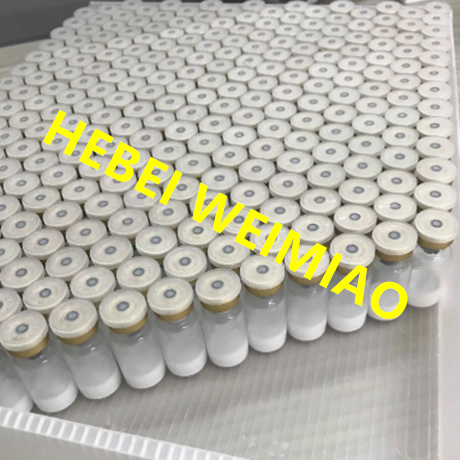
An Active Pharmaceutical Ingredient (API) is the biologically active component of a drug product that produces the intended pharmacological effect. Unlike the finished drug product, the API is the raw chemical substance. Within the pharmaceutical industry supply chain, APIs occupy a critical position, bridging chemical synthesis and final formulation. The quality, purity, and consistency of the API directly impact the safety and efficacy of the drug. This guide provides an in-depth exploration of APIs, encompassing their material science, manufacturing processes, performance characteristics, failure modes, and relevant industry standards. The increasing complexities of regulatory compliance, particularly regarding impurity profiling and process validation, are driving significant technological advancements in API manufacturing and characterization. Core pain points for pharmaceutical companies include maintaining supply chain security, reducing manufacturing costs without compromising quality, and navigating the evolving landscape of global regulatory requirements (USP, EP, JP, ICH guidelines). This document will address these concerns by detailing the critical factors affecting API production and performance.
Material Science & Manufacturing
APIs can range from small organic molecules synthesized through multi-step chemical reactions to large, complex biomolecules like peptides, proteins, or oligonucleotides produced through fermentation or recombinant DNA technology. The choice of synthetic route or manufacturing process significantly impacts the physical and chemical properties of the API, influencing its bioavailability, stability, and processability. Small molecule APIs frequently involve reactions such as alkylation, acylation, oxidation, reduction, and condensation, requiring precise control of reaction parameters (temperature, pressure, stoichiometry, catalyst selection) to maximize yield and minimize byproduct formation. Purification techniques such as crystallization, distillation, and chromatography are crucial for achieving the required API purity, typically exceeding 99%. For biologics, manufacturing relies heavily on cell culture, fermentation, and downstream purification processes including ultrafiltration, chromatography (affinity, ion exchange, size exclusion), and viral inactivation/removal steps. Raw material quality is paramount; excipients used in the API’s initial crystallization or precipitation must meet stringent purity requirements to avoid introducing impurities into the final product. Polymorphism, the existence of multiple crystalline forms of an API, is a critical consideration as different polymorphs can exhibit different solubility, dissolution rates, and stability profiles. Understanding and controlling polymorphism is essential for ensuring consistent drug performance. Furthermore, particle size distribution is a vital parameter for formulation and bioavailability and is closely controlled during crystallization or milling processes. Chemical compatibility with process equipment (stainless steel, glass, polymers) must be assessed to prevent corrosion or leaching of contaminants.

Performance & Engineering
The performance of an API is fundamentally linked to its physicochemical properties and its interaction with the biological system. Solubility and dissolution rate are key determinants of bioavailability, dictating how quickly and effectively the API is absorbed into the bloodstream. These properties are influenced by factors like particle size, crystal form, and pH. Stability, encompassing chemical and physical degradation, is another critical performance parameter. APIs can undergo hydrolysis, oxidation, photolysis, or isomerization, leading to loss of potency and formation of potentially toxic degradation products. Stability studies, conducted under accelerated and long-term conditions, are essential for determining the API’s shelf life and establishing appropriate storage conditions. Force analysis, particularly for solid dosage forms, is crucial to ensure the API can withstand the stresses of manufacturing, packaging, and transportation. Environmental resistance testing assesses the API’s sensitivity to temperature, humidity, and light exposure. Compliance with regulatory requirements (e.g., ICH Q7 Good Manufacturing Practice guidance) is paramount, requiring rigorous process validation, quality control testing, and documentation. Formulation engineers must consider the API's compatibility with excipients to ensure a stable and effective drug product. Furthermore, the potential for polymorphism-induced changes in performance must be carefully evaluated and controlled. The engineering aspects extend to process scale-up, where maintaining consistent reaction kinetics and mass transfer characteristics is crucial for ensuring reproducibility and product quality.
Technical Specifications
| Parameter | Unit | Specification Range | Test Method |
|---|---|---|---|
| Assay (Purity) | % | ≥ 98.0 | HPLC |
| Water Content | % | ≤ 0.5 | Karl Fischer Titration |
| Residual Solvents | ppm | Conforms to ICH Q3C limits | Gas Chromatography |
| Heavy Metals | ppm | ≤ 20 | ICP-MS |
| Particle Size (D90) | µm | 5-50 (dependent on API) | Laser Diffraction |
| Melting Point | °C | Specific to Compound | Differential Scanning Calorimetry (DSC) |
Failure Mode & Maintenance
API failure modes can stem from various sources during manufacturing, storage, and formulation. Degradation, as mentioned previously, is a common failure mode, often initiated by exposure to light, oxygen, or moisture. Impurities generated during synthesis or degradation can impact API safety and efficacy. Polymorphic transitions can occur during processing or storage, altering the API’s physical properties and performance. Contamination, either from process equipment or packaging materials, can compromise API purity. For biologics, aggregation and denaturation are significant failure modes that can reduce potency and immunogenicity. Fatigue cracking in processing equipment can lead to particulate matter contamination. Maintenance of API quality requires a robust quality management system (QMS) incorporating regular monitoring, trend analysis, and corrective and preventive actions (CAPA). Preventative maintenance of manufacturing equipment is crucial to minimize the risk of contamination. Proper storage conditions (temperature, humidity, light protection) must be maintained throughout the API’s lifecycle. Regular stability testing and impurity profiling are essential for identifying and addressing potential degradation pathways. Validated cleaning procedures are necessary to prevent cross-contamination between different APIs. Root cause analysis (RCA) should be conducted for any out-of-specification (OOS) results to identify and address the underlying issues. Furthermore, adherence to Good Manufacturing Practices (GMP) is fundamental for ensuring API quality and preventing failures.
Industry FAQ
Q: What are the critical differences between API manufacturing for small molecules versus biologics?
A: Small molecule API manufacturing typically involves chemical synthesis with defined reaction steps, relying heavily on process chemistry and purification techniques. It's generally more amenable to process optimization and scale-up. Biologic API manufacturing, on the other hand, involves complex biological processes like cell culture or fermentation, which are inherently more variable and challenging to control. Downstream purification is also significantly more complex for biologics, and stringent viral safety measures are crucial.
Q: How does polymorphism impact API performance and what strategies are used to control it?
A: Polymorphism can dramatically affect solubility, dissolution rate, and stability. Different polymorphs can exhibit vastly different bioavailability. Strategies to control polymorphism include careful selection of crystallization conditions (solvent, temperature, cooling rate), seeding with the desired polymorph, and using additives to inhibit unwanted transitions. Solid-state characterization techniques like X-ray powder diffraction (XRPD) and differential scanning calorimetry (DSC) are crucial for monitoring polymorph stability.
Q: What role does process analytical technology (PAT) play in API manufacturing?
A: PAT involves real-time monitoring and control of critical process parameters (CPPs) to ensure consistent product quality. Techniques like spectroscopic methods (Raman, NIR), particle size analyzers, and process chromatography are used to monitor reaction progress, impurity levels, and physical properties. PAT enables better process understanding and reduces the need for end-product testing.
Q: What are the key regulatory considerations for API manufacturing, particularly concerning impurities?
A: Regulatory bodies (FDA, EMA, etc.) have strict guidelines for impurity control, outlined in ICH Q3A, Q3B, and Q3C. APIs must be thoroughly characterized to identify and quantify all impurities, including organic impurities, inorganic impurities, and residual solvents. Impurities must be controlled to levels that are considered safe based on toxicological assessments.
Q: How is supply chain security addressed in API sourcing and manufacturing?
A: Supply chain security is a major concern. Pharmaceutical companies often employ strategies like dual sourcing of APIs, thorough supplier audits, and robust quality agreements. Traceability of raw materials and intermediates is essential. Continuous monitoring of supplier performance and proactive risk management are also critical components of a secure supply chain.
Conclusion
The production and quality control of APIs are fundamental to the pharmaceutical industry. A comprehensive understanding of the material science, manufacturing processes, and performance characteristics of APIs is essential for developing safe and effective drug products. The complexities surrounding polymorphism, impurity control, and regulatory compliance necessitate a rigorous approach to process development and quality assurance.
Looking ahead, advancements in continuous manufacturing, PAT, and data analytics will further optimize API production and enhance product quality. Addressing supply chain vulnerabilities and embracing sustainable manufacturing practices will be critical for ensuring the long-term viability of the pharmaceutical industry. Continued investment in research and development is crucial for discovering and producing novel APIs to meet evolving healthcare needs.